
Comparative effectiveness of anti-CD20 therapies and S1P receptor modulators in late-onset multiple sclerosis: real-world evidence from the MSBase registry
Abstract
Background
Late-onset multiple sclerosis (LOMS), defined by symptom onset after age 50, is increasingly recognised as a distinct clinical entity. Evidence comparing disease-modifying therapies (DMTs) in this subgroup remains limited.
Methods
We analysed data from the MSBase registry, including relapsing–remitting LOMS patients treated with anti-CD20 therapies (ocrelizumab, ofatumumab, rituximab) or S1PRMs (fingolimod, ozanimod, siponimod, ponesimod) for ⩾6 months. Primary outcomes were annualised relapse rate (ARR), Expanded Disability Status Scale (EDSS) change, confirmed disability worsening (CDW), progression independent of relapse activity (PIRA), and PIRA without MRI activity (PIRMA). Analyses used inverse probability of treatment weighting (IPTW). Causal forest and best linear projector (BLP) models explored effect modification.
Results
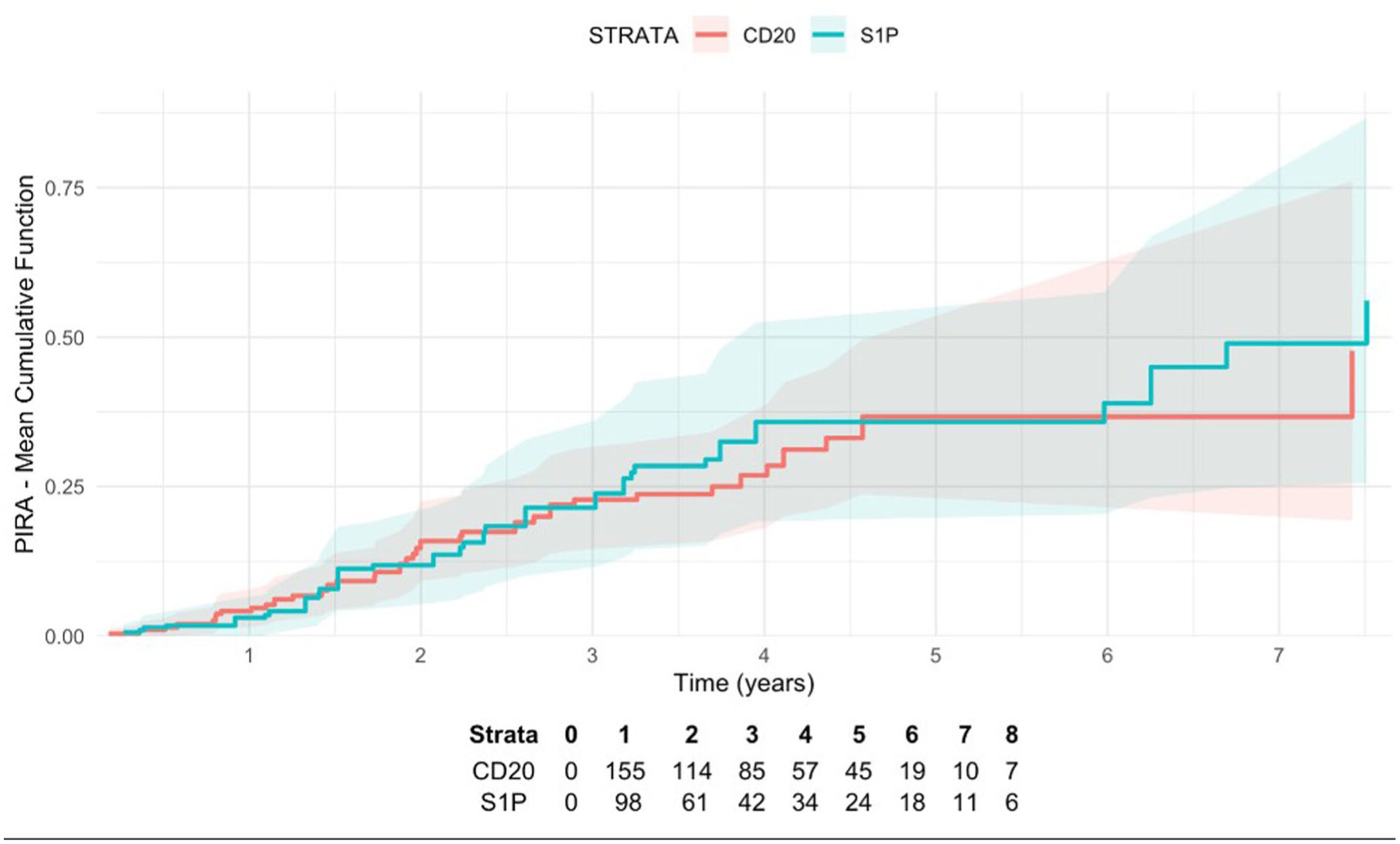
After weighting, 347 patients (median age 53.7 years; 69% female; median follow-up 6.9 years) were included. No significant differences were found for ARR, EDSS change, CDW, PIRA, or PIRMA. Exploratory analyses suggested greater anti-CD20 benefit in patients with earlier onset (⩽55 years), shorter disease duration (⩽2 years from diagnosis), and lower disability (EDSS < 3).
Conclusions
In this real-world LOMS cohort, no statistically significant differences were observed between anti-CD20 and S1PRM therapies. Exploratory analyses suggested anti-CD20 may be associated with better outcomes in selected subgroups; these findings are hypothesis-generating.


